
The short answer
On October 21, PHP released emergency patches for two critical vulnerabilities. It was a rough week for the internet. If your site runs on PHP, you had one question that day: how do I update on my host?
I had a patching kit already written and checked. I wanted to help. So I built a system that turned it into 20 help guides, one per hosting platform, and published them on a site that was about a week old.
In its first week, the help center earned 9,610 Google impressions and 129 clicks. Almost all of it landed in three days, October 21 to 23. It was on the first page within a day, with an average position of 7.3.
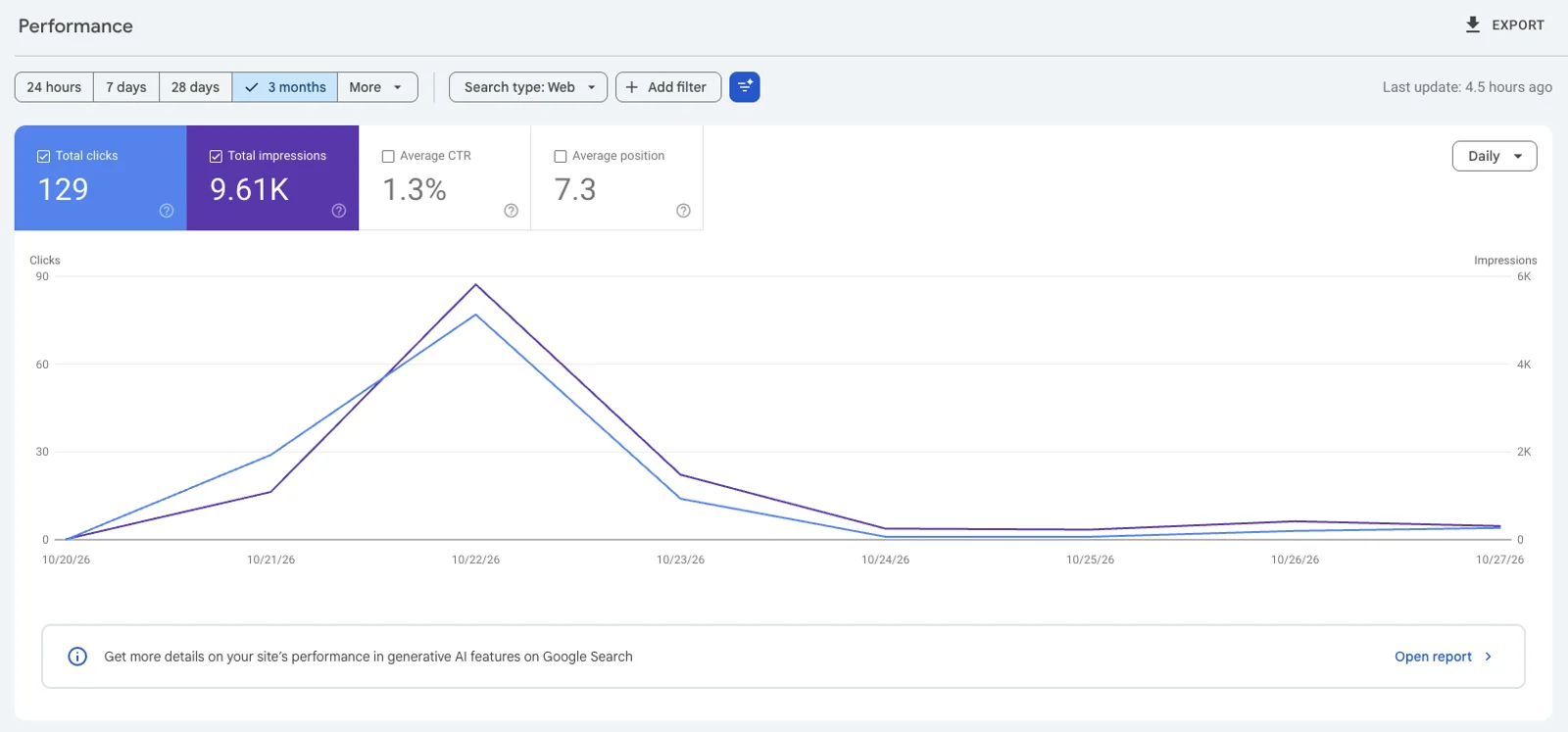
The AI wasn’t the reason it worked. The system around it was. So was the timing.
Once the news moment passed, I took the help center down. PHP isn’t what I do. If you came looking for a patch guide, PHP’s own security advisory lists the fixed versions.
What we built
A help center: walkthroughs for 20 hosting platforms, plus one guide to checking the update and rolling it back if something breaks.
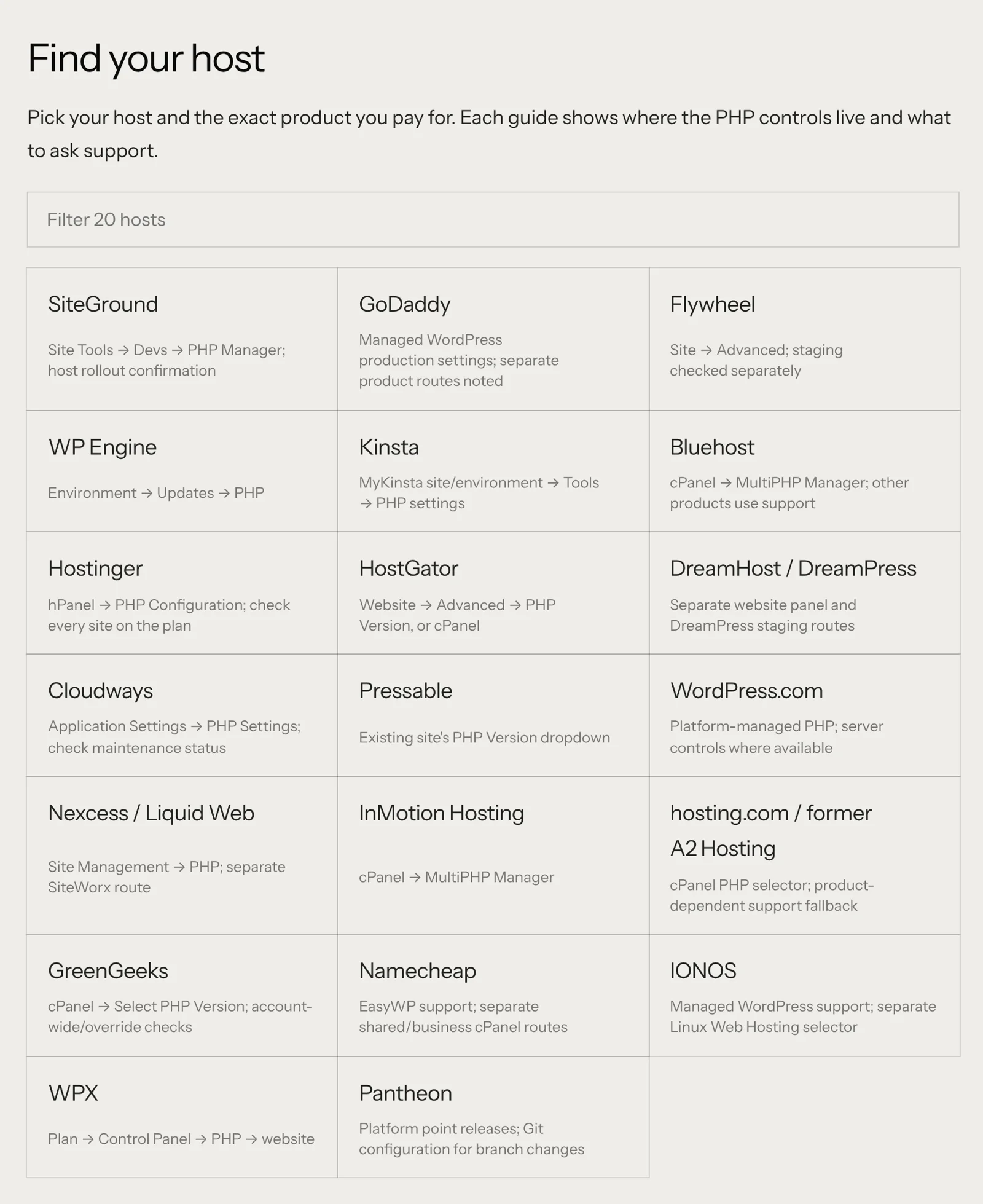
I didn’t ask a chatbot for an answer and paste it in. Here’s the system:
- A vetted source came first. A patching kit I’d already written and checked.
- Research agents did the digging. Codex spun up research agents that searched each host’s own help documentation and went through it in detail. Twenty hosts, twenty sets of docs.
- A second AI did the writing. Claude took the research and wrote the articles. One tool to dig, another to write.
- Every fact needed a home. Version numbers and steps trace to the kit, the official PHP advisories or the host’s own docs. Every host page listed its sources at the bottom, so you could check.
- Pictures where they help. The agents pulled or created images and diagrams to make the steps easier to follow.
- Built for machines, too. Short answers up top. Structured data for search engines. A plain-text version for AI assistants.

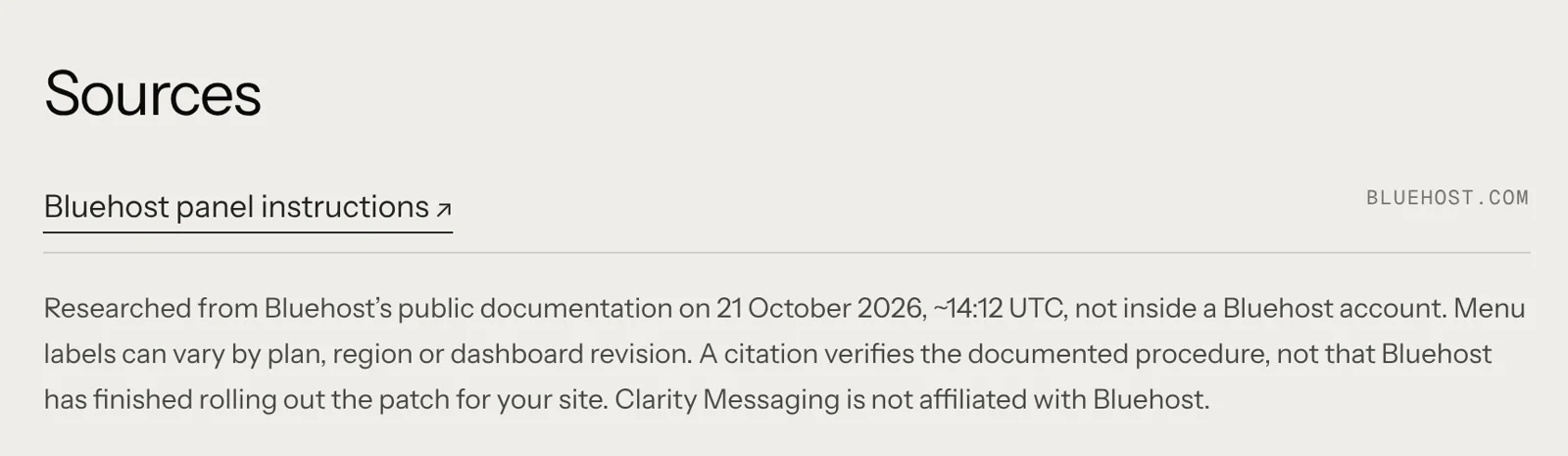
The whole run, research and writing, took about 20 to 30 minutes.
Chat isn’t the tool for this
Most people meet AI in a chat window. Ask a question, get an answer in seconds. That experience is built for speed.
Agent tools like Claude Code and Codex are built for finishing a task. You hand them the job, and they keep going for as long as it takes. They search, read, compare, write and check, then come back when it’s done.
That’s the difference between asking ChatGPT how to update PHP on 20 hosts and getting 20 guides built from each host’s own documentation. Same models underneath. Very different work.

Why it worked
Five conditions did the heavy lifting. Take one away and the result changes.
| Condition | What it looked like here | Without it |
|---|---|---|
| A real question, asked right now | The internet was breaking the week I published. Everyone with a PHP site wanted to know how to patch. | Pages nobody searches for. They sit there. |
| A source you’d stand behind | A kit written and checked before AI touched it, plus each host’s own docs | AI fills the gaps with guesses that sound right |
| The same question, many times | One question across 20 hosts | Every page is a one-off. A system saves you less time. |
| A system that checks itself | Research agents, two AIs, every fact traced to a source | Mistakes go out under your name |
| Written to help, not to rank | I published it because people needed it that week | Pages that chase a keyword. People can tell the difference. |
It’s one urgent topic over a few days. That’s a signal, not a trend. I don’t do a whole lot with super nerdy stuff like PHP. What it does show: a useful page that meets a real question gets found fast, even on a brand-new site.
Thinking about trying it? The questions I’d ask first
This was an experiment, not a recipe. I’m sharing what happened, not telling you to go publish 20 AI guides. But if you’re weighing something like it, these are the questions I’d ask first.
- What are people already asking you? Look at your sales calls, your support inbox and your Search Console queries. If the same question keeps coming up, that’s your first page. If you can’t name one, you’re not ready to publish at volume.
- What’s the source? Docs, SOPs, past answers, an expert on your team. If the honest answer is “the AI will know,” stop. Write the source first, then let AI work from it.
- Is it the same question many times? One per host, per location, per product, per integration. That’s where AI saves real hours. A single big essay? Write it yourself.
- How will you know it’s right? Either a person reads every page, or a system checks every fact against a source. If you have neither, publish fewer pages.
- What happens if a page is wrong? A bad step in a security guide can take a site down. Pricing, legal and health topics carry the same weight. The higher the cost of a mistake, the higher the bar for review.
- Who keeps it current? PHP versions change. Platforms move their buttons. A help center is a promise to keep it up to date. If nobody owns that, it goes stale and starts costing you trust.
- How will you know it worked? Impressions first, then clicks, then the thing you actually care about: calls, bookings, fewer support tickets. Decide which one counts before you publish.
When it’s a bad idea
Google and AI assistants don’t care if a bot wrote it. It just has to be good. Here’s when it won’t be:
- You want volume for its own sake. A hundred thin pages won’t beat ten useful ones. They’ll just take longer to check.
- There’s no source. The AI will make something up, and it will sound confident doing it.
- Nothing checks it before it ships. Then you’re not publishing guides. You’re publishing guesses with your logo on them.
- The facts change faster than you’ll update them. Stale help is worse than none. People follow it.
- It’s the core of what you sell. Your point of view is the product. AI can help you shape it. It can’t have it for you.
What still isn’t solved
Here’s the honest part. I don’t know yet how to hand a system like this to a client and say, “This is reliable. It won’t make stuff up, and it won’t be unwieldy to manage.”
I’ve been trying to figure that out for everyone. I don’t think the answer is a better prompt. It’s guardrails:
- a vetted source the AI works from, and nothing else
- rules for what the AI can and can’t touch
- checks that trace every fact to a source before anything ships
- someone who owns keeping it current
If you’ve got the questions and the source, that’s the work we do in AI workflows. If you’re not sure you have either, start with the Systems Diagnostic.